
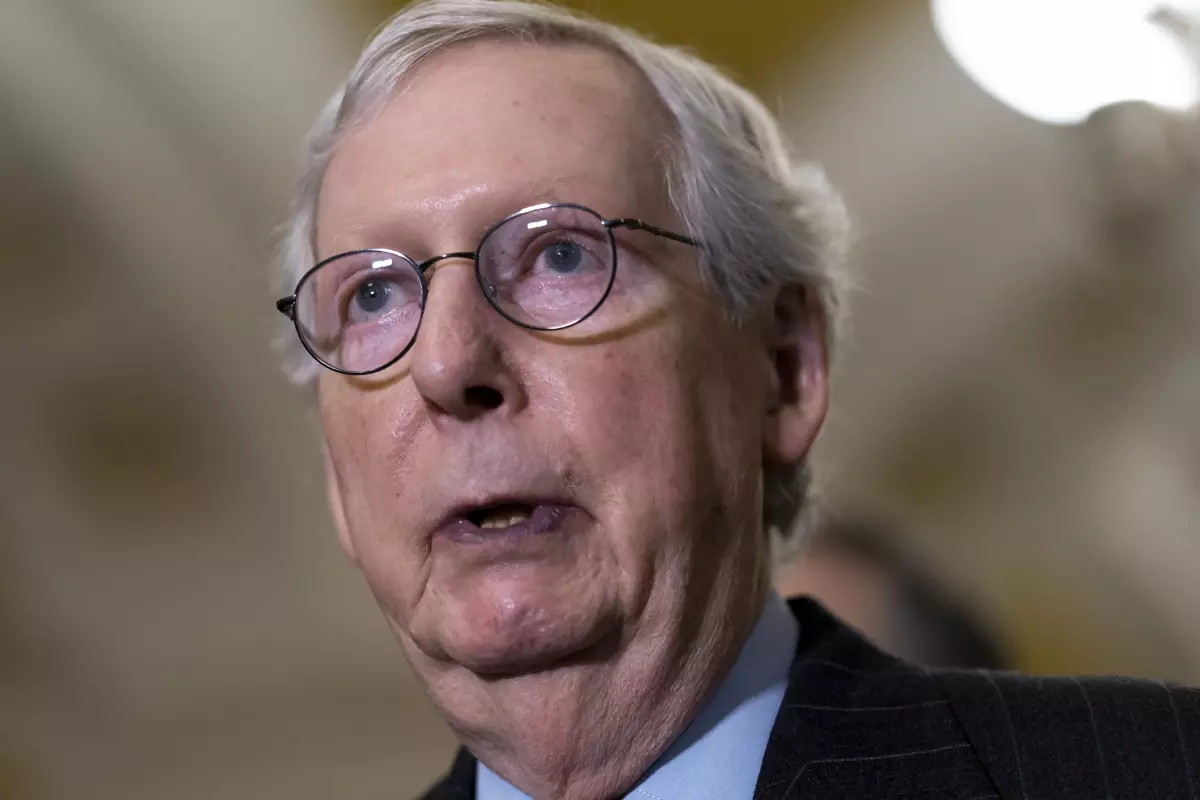
Mitch McConnell The Political Strategist Who Reshaped the U.S. Senate
Few politicians have left as deep a mark on American politics as Mitch McConnell. Whether you admire his strategic brilliance or criticize his political decisions, there’s no denying that McConnell has been one of the most influential figures in Washington for decades. Known for his calm demeanor, sharp political instincts, and mastery of Senate procedure, he has played a central role in shaping the direction of the United States Senate and the federal judiciary.
So, who is Mitch McConnell, and why has he remained such a dominant force in American politics? Let’s dive into his journey, leadership, achievements, controversies, and lasting legacy.
Who Is Mitch McConnell?
Mitch McConnell is an American politician who served as a United States Senator from Kentucky beginning in 1985. Over the years, he became one of the longest-serving Senate leaders in U.S. history, holding positions such as Senate Majority Leader and Senate Minority Leader.
Born on February 20, 1942, in Sheffield, Alabama, McConnell grew up in a middle-class family before moving to Kentucky, the state he would eventually represent for decades. His interest in politics began early, and he pursued it with remarkable determination.
Today, McConnell is widely recognized as one of the Republican Party’s most influential leaders, known for his ability to navigate complex political battles and build long-term strategies.
Early Life and Education
Like many successful politicians, McConnell’s journey wasn’t without challenges. As a child, he contracted polio, a disease that temporarily affected his mobility. Thanks to extensive treatment and perseverance, he made a full recovery—a story often highlighted as a testament to his resilience.
He attended the University of Louisville, where he earned a degree in political science before graduating from the University of Kentucky College of Law. During these years, his passion for government and public service became increasingly clear.
After law school, McConnell worked in various political roles before serving as Jefferson County Judge/Executive, gaining valuable experience in public administration.
Entering the U.S. Senate
McConnell first won election to the U.S. Senate in 1984, defeating incumbent Democratic Senator Walter “Dee” Huddleston in a closely contested race.
That victory marked the beginning of a political career spanning more than four decades. Throughout multiple re-election campaigns, Kentucky voters continued to return him to Washington, making him one of the state’s longest-serving senators.
His rise wasn’t built on flashy speeches or headline-grabbing moments. Instead, he earned a reputation as a disciplined strategist who understood the inner workings of Congress better than almost anyone else.
Becoming Senate Majority Leader
If politics were a game of chess, Mitch McConnell would often be described as one of its grandmasters.
In 2015, Republicans gained control of the Senate, and McConnell became the Senate Majority Leader. During his tenure, he focused heavily on advancing conservative priorities, confirming federal judges, and passing legislation aligned with Republican goals.
His leadership style emphasized preparation, patience, and procedural expertise. Rather than relying on dramatic public appearances, he often worked behind the scenes, negotiating votes and managing legislative strategy.
Many political analysts consider him one of the most effective Senate tacticians of the modern era.
Mitch McConnell’s Biggest Achievements
Throughout his lengthy career, McConnell has accumulated an impressive list of accomplishments.
Transforming the Federal Judiciary
Perhaps his most significant legacy is his role in reshaping the federal court system.
Under his leadership, the Senate confirmed hundreds of federal judges, including three U.S. Supreme Court justices during President Donald Trump’s administration:
- Neil Gorsuch
- Brett Kavanaugh
- Amy Coney Barrett
These appointments are expected to influence American law for decades, affecting decisions on constitutional rights, healthcare, business regulations, and more.
Tax Reform
McConnell played an important role in passing the Tax Cuts and Jobs Act of 2017, one of the largest tax reform bills in recent American history.
Supporters argued the legislation encouraged economic growth and investment, while critics believed it disproportionately benefited corporations and higher-income Americans.
Criminal Justice Reform
Although often associated with conservative policies, McConnell also supported passage of the First Step Act, a bipartisan criminal justice reform bill signed into law in 2018.
The legislation introduced prison reforms and expanded opportunities for reduced sentences for certain federal inmates.
Major Controversies
No long political career comes without controversy, and Mitch McConnell’s is no exception.
Supreme Court Nomination Battles
One of the most debated decisions of McConnell’s career came in 2016, when he declined to hold Senate hearings for President Barack Obama’s Supreme Court nominee, Merrick Garland.
McConnell argued that the next president should make the appointment because it was an election year.
However, in 2020, following the death of Justice Ruth Bader Ginsburg, he moved quickly to confirm Amy Coney Barrett just weeks before the presidential election.
Critics called the two decisions inconsistent, while supporters argued the differing political circumstances justified the approach.
Partisan Politics
McConnell has frequently been criticized for contributing to increasing political polarization in Washington.
Supporters view him as a highly effective defender of conservative principles.
Critics argue his legislative tactics have intensified partisan gridlock and made bipartisan cooperation more difficult.
Like many influential political figures, opinions about him often depend on one’s political perspective.
Leadership Style: Quiet but Calculated
Unlike politicians who thrive on constant media attention, McConnell has built his career through careful planning rather than dramatic speeches.
Think of him as the architect instead of the construction worker. While others focused on headlines, McConnell often concentrated on laying the foundation that would shape future political outcomes.
His strengths include:
- Deep understanding of Senate rules
- Strong party discipline
- Long-term strategic thinking
- Skilled vote counting
- Effective judicial confirmation strategy
These qualities helped him maintain influence even during periods when Republicans were in the Senate minority.
Health Concerns and Public Attention
In recent years, McConnell’s health has become a topic of public discussion after several highly publicized incidents in which he briefly froze during press conferences.
Although he later returned to work, these events raised questions about the physical demands of serving in high-level political leadership.
Despite increased scrutiny, McConnell continued fulfilling his Senate responsibilities while announcing plans to eventually step down from Republican leadership, signaling a transition to a new generation of party leaders.
Mitch McConnell’s Lasting Legacy
Love him or disagree with him, Mitch McConnell has undeniably changed American politics.
His influence extends beyond individual pieces of legislation. By prioritizing judicial appointments, refining Senate strategy, and strengthening party discipline, he reshaped how Congress operates.
Future historians will likely remember him as one of the most consequential Senate leaders in modern U.S. history. His impact on the federal judiciary alone could continue shaping legal decisions for decades.
Political leaders come and go, but few leave fingerprints as permanent as McConnell’s.
Conclusion
Mitch McConnell’s career is a story of patience, political calculation, and enduring influence. From his early days in Kentucky to becoming one of the most powerful figures in the U.S. Senate, he demonstrated an unmatched understanding of legislative strategy and party leadership.
While his policies and decisions have sparked passionate debate across the political spectrum, his significance in American history is difficult to dispute. Whether viewed as a master strategist or a polarizing political figure, Mitch McConnell’s legacy will continue to shape the United States long after his leadership era comes to an end.